
The Governed Agentic AI Platform
The Legion Intelligence platform turns mission intent into governed action across the systems and data you already run. Agents carry out the work. Authority stays with command. Every action is attributed and audited.
In use across


Getting an answer is not getting the work done.
Three gaps sit between an AI answer and a completed operational task.
Insight without action
Chat tools answer questions. A person still does every step after that.
Capability without control
AI expands what a team can do. Without governance, it expands what can go wrong.
Tools without mission reality
Enterprise software assumes connectivity, clean data, and an unclassified network. Operations rarely offer all three.

What is a governed agentic AI platform?
The Legion platform is a governed agentic AI platform for environments where security, reliability, and accountability are non-negotiable. AI agents complete multi-step operational work (intelligence production, operational reporting, maintenance coordination) under human authority, across the systems and data you already run, with every action attributed and audited.
What runs underneath.
Download Product SHeetOperational work breaks the assumptions ordinary software is built on. Several people and several agents hold the same product at once. Data arrives fragmented and classified, and the markings have to survive the trip. Consequential steps wait for a person with the authority to approve them.
Networks drop for days, and capability has to keep running on hardware that has none. Requirements change faster than a release cycle, so the people who own the work need to be able to change it themselves. And the models underneath keep improving, which means trust in them gets re-proven rather than assumed.
How a job gets done is defined once and carried across environments instead of reinvented by every team and every tool. The six capabilities below are how that holds together at once.
Governed Capabilities
Multiplayer
People and agents, one live document.
Mission Builder
Operator-built apps from governed parts.
Dynamic Knowledge Engine
Reasoning across your data in place.
Agentic Governance
The gate every action clears
Eval Loop
Everything measured on your work.
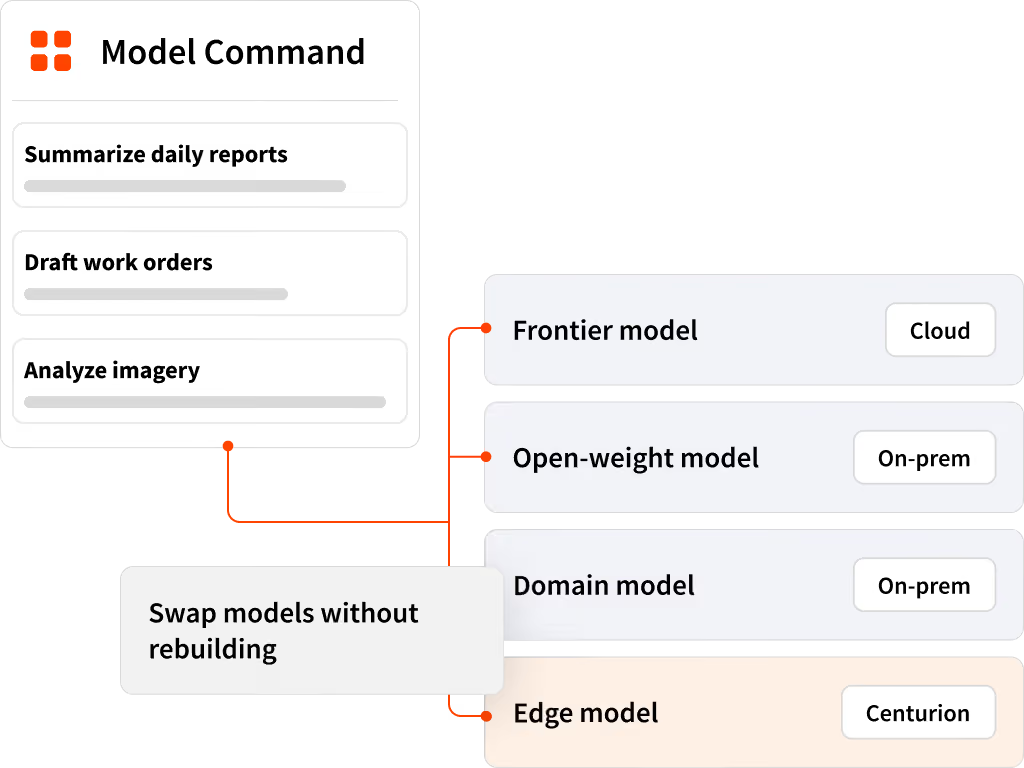
Model Command
Every model behind one governed gateway.
Model Supply
Frontier Models
Customer-approved, connected deployments.
Open weight models
Locally-hosted, on-prem, air-gapped.
Domain-specific models
Fine-tuned for the task.
Deployment Environments
Cloud
FedRAMP High
On-prem
No cloud dependency
Air-gapped and classified
IL2 through IL6
Edge
Centurion, DDIL
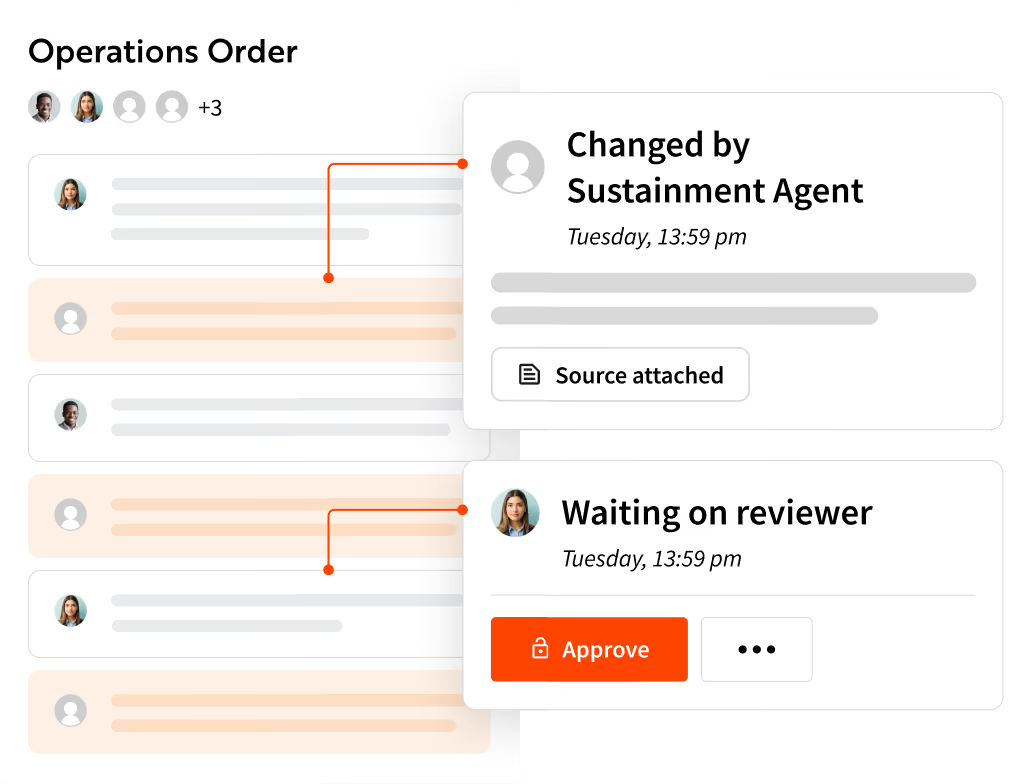
When five people and three agents work the same document, who holds the pen?
Systems of record store what already happened. In Legion, the work itself is the shared surface. People and agents build it together, and it keeps the record of every change either one makes.
Legion Multiplayer runs a recurring staff process as one shared artifact, open to authorized participants and scoped agents at the same time. Every agent-authored change is attributed to the agent, and the steps you gate wait for an authorized reviewer. Agents can propose a classification marking. They never set one.
Multiplayer is the only shared work surface that runs on SIPR and at the disconnected edge. It also deploys on enterprise cloud and in on-premises and air-gapped environments, with Centurion by Legion Intelligence carrying it to the edge. What comes out carries its approvals, its sources, and the record of who changed what.
Who builds mission software when the mission changes weekly?
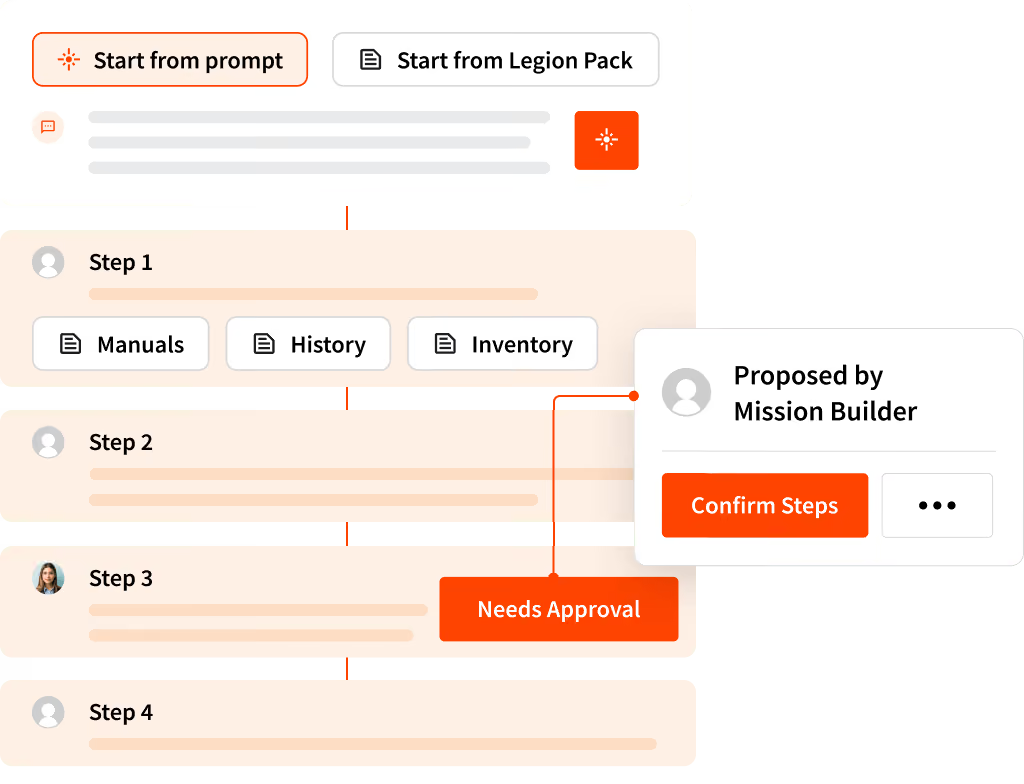
Mission Builder is how the people who own the work build the tools they need. They describe the workflow in plain language, and Legion composes a working application from governed parts: screens, workflows, data connections, and agents. Each part carries Legion's permissions, classification handling, and audit, so governance is inherited, not added afterward.
Teams start from the Pack closest to their work, shape it until it fits, and shape it again the week the requirements change. Partners and integrators build in the same environment, under the same governance, so a capability delivered by a partner is one your own team can extend without going back to them.
A new capability is scoped in hours, validated against real work in days, and in production in weeks. No new software program, no vendor release cycle. A services customer runs this way today, drafting work orders in 90 seconds that used to take hours, with 25% more technician capacity and no new hire.
How do you reason across data you never normalized?
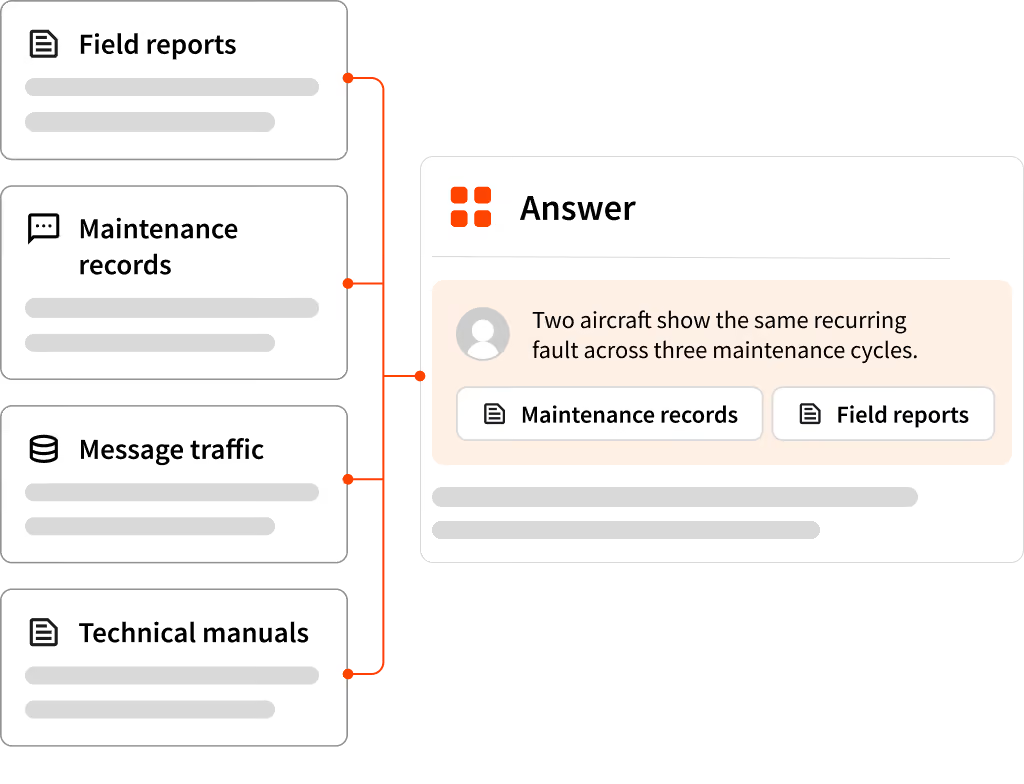
Twenty years of fragmented records do not have to be normalized into a proprietary schema before the first useful answer arrives. The Dynamic Knowledge Engine reasons across data in place, turning what a mission already holds into knowledge that agents can use. No services engagement stands between the data and the work.
Documents, structured records, and message traffic are usable as they arrive. Classification markings and provenance travel with every passage, so an answer stays tied to an authoritative source and carries the markings that source carried. Retrieval is classification-aware, pulling only the passages that matter. Terrain is reasoned over alongside text, so a question spanning a map and a maintenance log returns one cited answer.
Legion connects to more than 100 systems out of the box, including IBM Maximo, ServiceNow, Microsoft SharePoint, and Microsoft Teams, with MCP server support for agent tools. Integrations enforce your permissions end to end, so connecting a system never widens who can see its data.
When a thousand agents are working, who stays in command?
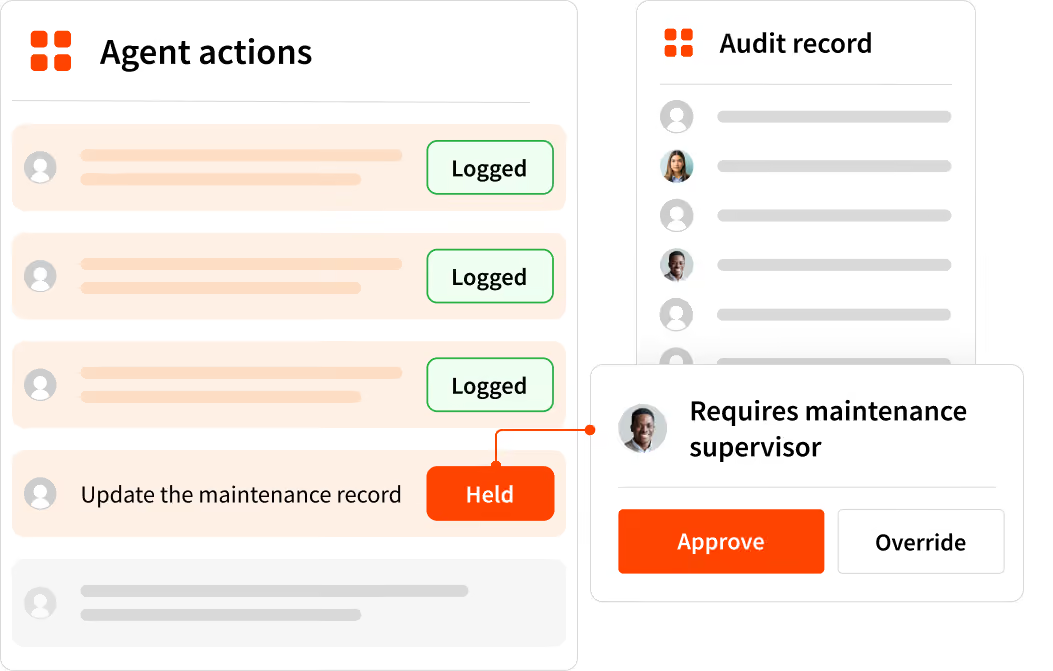
Governing what a model can see is table stakes. Legion governs the work itself: operators define objectives and constraints, agents complete the steps across systems and data, and every step runs inside policy you set. Permissions decide what an agent can see. Checkpoints decide what it can do.
Consequential actions wait for the person who holds the required authority: approve a report before release, route a maintenance task, hold a record update for review. Any action can be paused, redirected, or overridden. Every action is logged with full attribution, including those taken by agents, in an append-only record that shows who requested, approved, and changed the work. The record exports as evidence for an ATO package or an IG review.
Which model is right for the work your unit does?
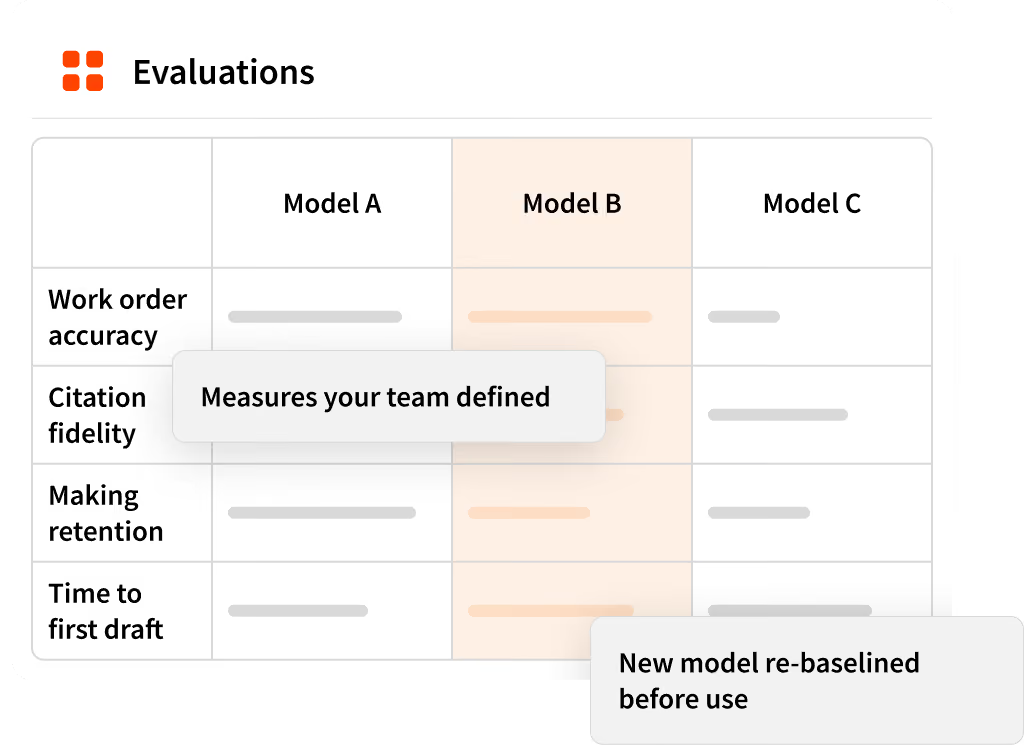
A public benchmark measures someone else's tasks. The Eval Loop scores models, agents, and workflows against the work your teams actually perform, using measures your organization defines.
Evaluation runs inside your own boundary, on connected networks and air-gapped ones alike, under the requesting user's identity, with every run logged. Any measure your team can define in code becomes a metric. Every new model is re-baselined against your own work before it takes over a task, so drift is caught before it reaches operations.
What happens when a better model ships next quarter?
Model Command puts every model a deployment can reach behind one governed gateway. Teams run frontier models, open-weight models, and domain-specific models side by side, and match the model to the task. A summarization step and a targeting analysis do not need the same model, and paying frontier rates for routine work is a cost you do not need to carry.
New models are added through Model Command without code changes, so teams switch as approvals change or better models ship. Routing, quotas, and quality-of-service controls keep performance predictable, and no Legion deployment depends on a single model vendor. Access and spend follow the roles you already administer, and every call is logged and attributed.
The same gateway governs frontier cloud APIs and the CPU-class models running on Centurion at the edge.
Integrate With the Systems You Use Every Day





Three ways to put Legion to work.
Legion Packs, Centurion by Legion Intelligence, and Mission Builder share one platform.
Choose Packs, not prompts.
Role-specific AI apps out of the box, with humans in command. Packs are how Legion is purchased and used.
Learn MoreCloud when you can. Edge when you must.
Centurion packages Legion into a deployable system for DDIL, classified, and edge environments. Same Packs, same governance.
Learn MoreBuild the tools your work needs.
Teams can shape what they need from governed parts. No engineering queue.
Learn MoreBuilt for classified, air-gapped, and degraded environments.
Legion is built for the conditions high-consequence work actually runs in: classified, air-gapped, degraded, and disconnected environments. It runs on classified networks at IL2 through IL6 and deploys fully disconnected. Moving a deployment into a classified or disconnected network requires no re-architecture: what a team builds in one carries to the next.
Centurion is the deployable edge system integrating hardware, software, and sustainment that runs Legion in DDIL (denied, degraded, intermittent, or limited connectivity) conditions. Agents, workflows, and models run locally on the deployed system: Legion Packs operate offline-first, hold work through disruption, and synchronize when connectivity returns and policy permits. Governance does not loosen when connectivity drops.
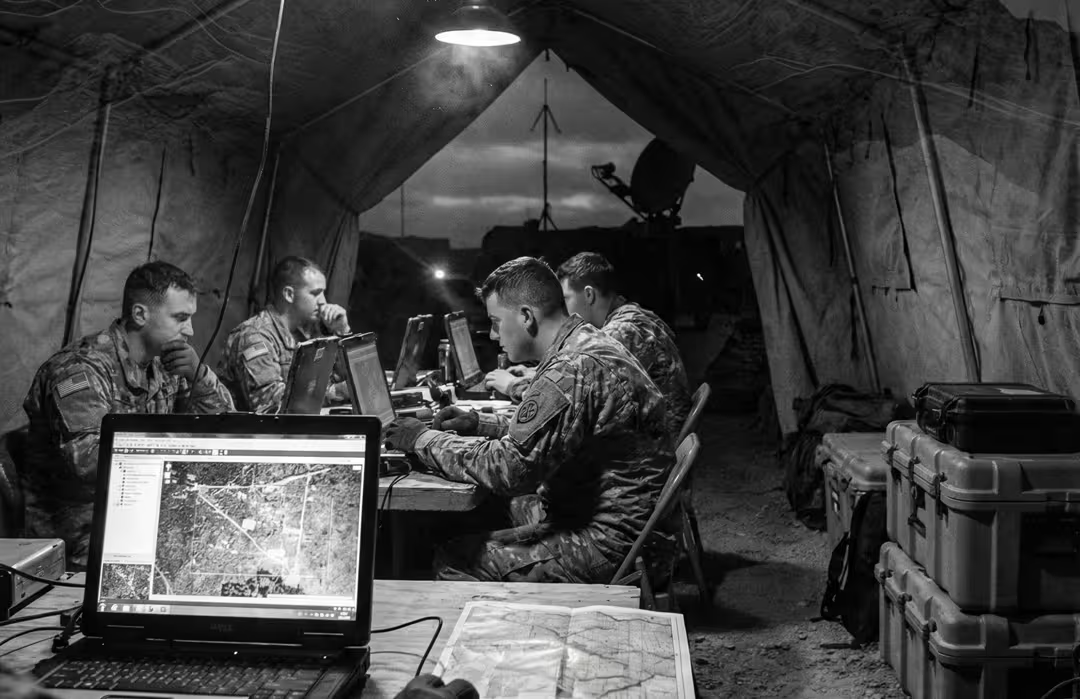

Proven where the work happens.
Legion is in use across the U.S. Army, U.S. Air Force, the U.S. Department of Energy, the Missile Defense Agency, and the Defense Industrial Base. Same platform that was proven by 20,000+ users across U.S. Special Operations Command.
48x Faster
INTSUM generation at XVIII Airborne Corps
216 hours saved per weekly
Across USSOCOM battalion staff workflows
88% Faster SITREPs
Reduced from 8 hours to under 1 hour
25% More Technician Capacity
With the Maintenance Technician Pack
Operational in 1 Day
From field install to mission-ready (Scarlet Dragon 26-01)
A Chat Assistant
Chat tools answer questions, and a person still performs every step in between. On the Legion platform, Apps complete multi-step work under human approval, so what you measure is the job done.
A Custom Build
Internal builds spend months on identity, permissions, integrations, and auditability before the first workflow reaches users, and each new environment becomes a separate project. Legion arrives with governance, deployment patterns, and integrations already in place, and adapts as the work changes.
An Integrator-led Platform Program
These programs deliver on the integrator's timeline: months of services before a first outcome, changes routed through a vendor backlog, and a stack standardized on that vendor's models and terms. Legion deploys in weeks and adapts in days, by your teams, with the model choice staying yours.
Security for classified and high-consequence environments.
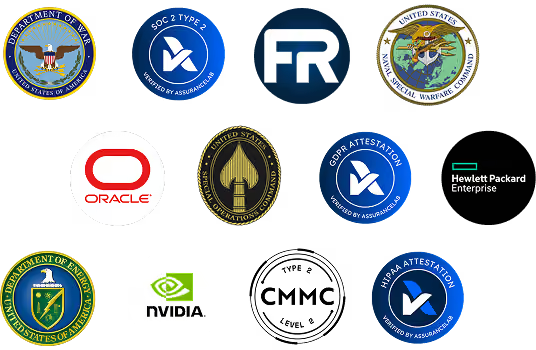
Legion brings security designed for the U.S. Department of War to every deployment. The platform enforces zero-trust principles to protect data, secure access, and contain the impact of any breach through segmentation and policy enforcement. Accreditation and security posture:
- FedRAMP High
- IL2 through IL6
- SOC 2 Type II certified
- NIST 800-53 compliant
- Ready to manage ITAR data
- CMMC 2.0 Type 2
- Air-gapped deployment capable
- HBOM and SBOM available for accreditation

See the platform in your environment.
See how Legion would run for your team: which Packs fit your roles, which systems connect first, and how a pilot expands into a larger footprint.
FAQs
What is the Legion platform?
The Legion platform is a governed agentic AI platform for environments where security, reliability, and accountability are non-negotiable. AI agents complete multi-step operational work (intelligence production, operational reporting, maintenance coordination) under human authority, across the systems and data you already run, with every action attributed and audited.
How is the platform different from a chatbot or AI assistant?
A chatbot answers questions while a human still does every task. The Legion platform runs Legion Packs whose Apps carry out the work directly: drafting products, coordinating across systems, and updating records, all under human approval with full attribution. The completed job is what the platform delivers.
What are Legion Packs, and how do they relate to the platform?
Legion Packs are role-based capability bundles that deploy a ready Space with the right Apps. The platform is what every Pack runs on: the models, integrations, governance, and deployment underneath. Centurion runs the same platform at the edge, so Legion Packs and Centurion share one foundation rather than being separate products.
Which AI models does the platform support?
The Legion platform is model-agnostic. It runs open-source, proprietary, and fine-tuned models, routing to the latest customer-approved frontier models in connected deployments and running locally hosted open-weight models in air-gapped and on-prem deployments. New models are added through the Model hub without code changes, and you choose the best model for each task.
Can the platform run without cloud connectivity?
Yes, through the right deployment. On-prem and air-gapped deployments run with no cloud dependency, with models hosted locally. For DDIL (denied, degraded, intermittent, or limited connectivity) conditions, Centurion by Legion Intelligence runs the same Packs and governance on a deployable edge system, offline-first, synchronizing when connectivity returns.
What environments and classification levels does it support?
The platform deploys across cloud, private cloud, hybrid, bare metal, on-prem, and air-gapped and classified networks, and runs at IL2 through IL6, including classified SECRET environments. The same Packs and governance run identically across all of them, with no re-architecture required to move between them.
How does Legion keep humans in control of AI agents?
Operators define objectives and constraints, agents carry out the steps, and every action runs inside policy you set. Human-in-the-loop checkpoints sit at each stage, and any authorized user can pause, redirect, or override an action. Every action is logged with full attribution, including agent actions.
What systems does the platform integrate with?
The platform connects to more than 100 systems out of the box, including IBM Maximo, ServiceNow, Microsoft SharePoint, and Microsoft Teams, with MCP server support for agent tools. Legacy and custom systems of record connect through the same API framework, with your existing permissions enforced end to end.
What security and accreditation does the platform hold?
The Legion platform is FedRAMP High and operates at IL2 through IL6. It is SOC 2 Type II certified, NIST 800-53 compliant, and ready to manage ITAR data, with air-gapped deployment capability and HBOM and SBOM available for accreditation. Your data stays in your environment and never trains external models.
How quickly can the platform be deployed?
The Legion platform has been installed and operational in one day in field evaluations, and standard deployments are scoped at 30 days. It connects to existing systems and data without migrations or infrastructure replacement, so teams start running governed work quickly.
What is Mission Builder?
Mission Builder is how customers and partners build their own Packs. Teams describe what they need in plain language, build a Pack tuned to their requirements, and extend or modify the Packs Legion ships as the work changes. Every Pack built in Mission Builder inherits the platform's permissions, classification handling, and audit.