
.png)


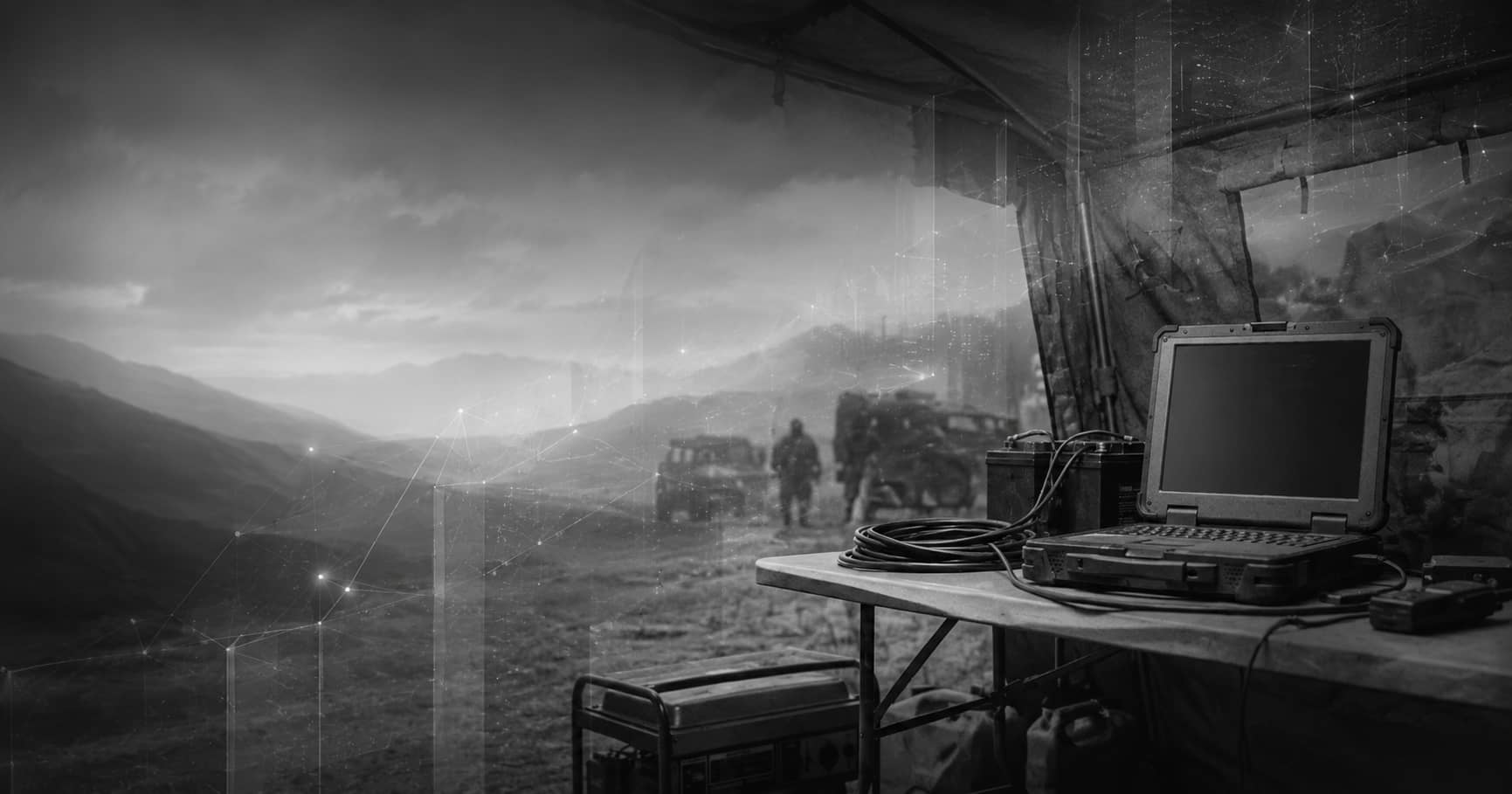
For users who move between operating environments, AI capability needs to be able to move with them. Centurion III, the laptop-class configuration of Centurion by Legion Intelligence, brings Legion's agentic AI platform into a form factor that goes with the user rather than tying them to a fixed operating location. In July, we took Centurion III to Hawaii for a small-form-factor operational assessment hosted by SOCOM's TACLAN program to put that premise to the test: what does it take to run the platform, and a usable local model, on a 64 GB laptop? Laptop-class hardware is one point on a spectrum, and the assessment showed what that point supports.
Edge environments vary in compute, connectivity, and what the mission asks AI to do. "The edge" might be one user with a laptop, a small team at a temporary site, or a tactical node supporting dozens of people. Centurion III put us at the laptop end of that range.
The platform fit. The tradeoff was model capability.
We deployed Legion on a Dell XPS 16 with an Intel Core Ultra X7 358H processor and 64 GB of LPDDR5X memory. The platform ran locally, using the same core architecture we deploy in larger environments. Centurion runs that architecture across a range of hardware and form factors depending on where it needs to operate and what users need it to do. The laptop gave us a chance to see how far down that range we could go.
Where we started to see tradeoffs was in the AI itself. We ran a 20-billion-parameter open-source model locally, alongside the smaller models that support other parts of the platform. Hardware acceleration made running the larger model locally practical, while smaller supporting models ran on the CPU. Going larger meant reaching the limits of what we could run locally. The more useful question is what needs to run locally, and when a task benefits from more powerful models hosted elsewhere.
Local doesn't have to mean local-only
Centurion III also showed why we don't think every model needs to fit on the device. Everything needed to run Legion remained local. When connectivity was available, that same deployment could also reach larger models running elsewhere: Legion's production environment, a larger Centurion deployment nearby, or whatever inference service already exists in that environment (Azure OpenAI, AWS Bedrock, Palantir, and similar).
If that connection went away, what dropped off was access to the remote model, not the local platform or local AI. Put the capability that needs to be close to the mission on the device, and reach more capable models running elsewhere when connectivity allows.
Experiments we didn't plan for
The event also allowed for experimentation beyond what we originally came to test. Working alongside other mission systems’ data sources surfaced an opportunity to bring Cursor on Target (CoT) position and event data from external TAK systems into Legion. The team built and tested an experimental CoT ingestion service in a day, going from finding the source to moving data through it. That was only possible because the platform was already on site.
We also began exploring what it would take to move Legion onto hardware smaller than Centurion III. That work is still exploratory. Less local compute makes the question of what runs on the device and what runs elsewhere more consequential, not less, which is what we're testing next.
Centurion III is one configuration in a range sized to where the work happens. Talk to us about which fits your deployment.